Home Window Sealing & Leak Repair | Austin Professional Services
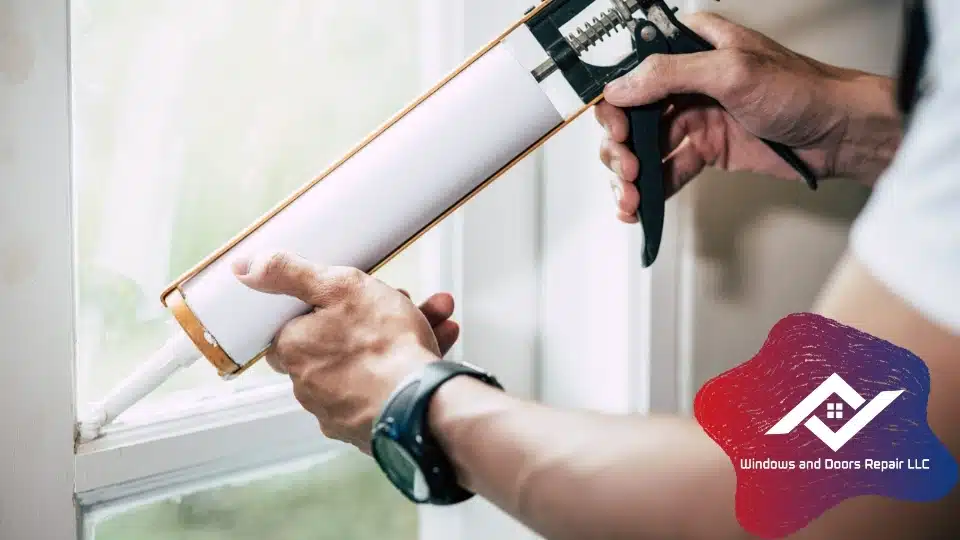 Home window sealing metrics require absolute sub-layer bonding precision to prevent building thermal loss.
A window is not a standalone product. It is a manufactured assembly set into a structural rough opening, and the joint where those two systems meet, the window frame on one side and the masonry, framing, or concrete on the other, is one of the highest-stress connections in the entire building envelope. Get that connection wrong, or let it degrade unaddressed, and the consequences show up as drafts, condensation, discomfort, and eventually mold. That is precisely the gap our home window sealing services are built to close, and it is why this connection deserves far more attention than most homeowners give it.
Central Texas conditions put this joint under continuous, compounding stress. South and west facing frames in the Austin area routinely see surface temperature swings of 60 degrees or more between early morning and mid afternoon during summer months, and that daily thermal cycling forces the window frame material to expand and contract at a different rate than the surrounding masonry or siding. Add the slow, ongoing foundation movement typical of homes built on Central Texas expansive clay, and the perimeter joint is being pulled, compressed, and flexed on a near-constant basis. Left unmanaged, this movement splits sealant beads, pulls caulking away from one side of the joint, and opens gaps that are easy to miss on a casual walk-around but very effective at moving air and bulk water straight into the wall assembly.
 Figure 1: The window-to-wall perimeter joint bridges the interior air barrier and the exterior weather line, and both must remain unbroken for the seal to function.
The Anatomy of a Failed Window Seal (Key Warning Signs)
Seal failure is not one problem, it is three distinct failure mechanisms, and correctly identifying which one (or which combination) is present determines the entire repair approach.
- Air Infiltration (Convection): Once perimeter sealant shrinks, cracks, or separates from the substrate, it opens a direct air path between conditioned interior space and the outside. Wind pressure and HVAC cycling then move air through that gap continuously, not occasionally. The result is a draft near the frame, a wall section beside the window that reads several degrees off from the rest of the room, and an HVAC system that runs longer than the square footage should require. This is the mechanism behind most window draft repair Austin service calls we receive, and it is usually the easiest of the three failures to correct once properly diagnosed.
- Driving Rain Leaks: Central Texas storms frequently push rain laterally against the building face rather than letting it fall straight down. Under that kind of wind driven rain, any split or gap in the exterior perimeter caulk becomes an entry point, and water tracks along the sill and behind the trim into the framing cavity itself. This is what makes leaking window frame repair urgent rather than cosmetic: the damage (rot in wood framing, corrosion in metal studs, saturated insulation, mold growth) develops fully hidden inside the wall, often for months, before it ever becomes visible as an interior stain or a soft spot in drywall.
- Inter-Pane Thermal Seal Failure: This failure happens inside the window unit itself, not at the wall joint. Double pane windows depend on a spacer bar containing a desiccant to hold a sealed, dry cavity between the two panes. When the edge seal on that spacer degrades from age or UV exposure, atmospheric moisture works its way in, saturates the desiccant, and leaves the glass permanently fogged. A broken thermal seal double pane window cannot be fixed with caulk or cleaning; the insulated glass unit itself has to be replaced, since the desiccant's capacity is gone for good once moisture has entered.
Why Standard DIY Caulking Overlays Fail
A properly designed sealant joint bonds to exactly two surfaces: the window frame on one flank, the wall substrate on the other, with nothing bridging the gap in between. That two-flank configuration is what lets the sealant stretch and compress as the joint moves, the same way a rubber band flexes because it is only anchored at its two ends. When someone applies new caulk over old, failing material, the new bead does not reach the actual substrate at all. It bonds to the surface of the old sealant, which is already brittle, chalky, and losing its own grip underneath. That old layer keeps shearing away exactly as it was already doing, and the fresh topcoat goes with it, usually within the first hard thermal cycle or the next small increment of foundation movement.
This is also where joint geometry matters and where an overlay cannot help. A joint that is too deep relative to its width behaves stiffly and cracks under movement. One that is too shallow does not have enough material volume to stretch without tearing. Getting that ratio correct requires removing the old material down to a sound substrate and rebuilding the joint properly, not adding another layer on top of a joint that was never sized correctly to begin with.
Comparing High-Performance Sealant Options
| Sealant Technology Type | Elastomeric Durability | Primary Performance Advantage |
|---|---|---|
| Advanced Hybrid Polymer Compounds | Maximum (Class 50+) | Pairs silicone's UV resistance with the mechanical adhesion strength of polyurethane, allowing the joint to accommodate significant movement without tearing or shrinking. This is our default recommendation for high sun exposure elevations across the Austin footprint. |
| Commercial Grade Polyurethane Sealants | High (Class 25) | Bonds firmly and permanently to porous substrates without requiring specialty primers, which makes it the right choice when replacing window caulking exterior masonry joints on brick, stone, or limestone. |
| Standard Consumer Acrylic Latex (DIY) | Low to Moderate | Shrinks noticeably during cure and breaks down under sustained UV exposure. It lacks the elasticity needed to survive building movement, which is why it tends to split at the joint edges within a single season in this climate. |
Our Professional Sealing & Leak Repair Process
Every job follows the same technical sequence, regardless of window size or frame material, because skipping a step is exactly how a repair looks fine on installation day and fails within the year.
Detection
Work starts with a full visual inspection of the interior and exterior perimeter joints for cracking, chalking, and discoloration that signals prior moisture intrusion. Where a draft is reported without an obvious visual source, we perform direct draft sourcing along the frame to identify the exact air path. Where staining or soft framing is suspected, moisture testing at the sill and surrounding wall confirms whether water has already reached the structural substrate, since that changes the job from resealing to remediation.
Extraction & Prep
All degraded sealant is mechanically removed down to the original substrate, whether that is wood trim, aluminum frame, or exterior masonry. Any old material left in place becomes exactly the weak intermediate bonding layer described earlier, so this step is never shortcut. Both flanks of the joint are then cleaned of dust, oxidation, and debris to allow a true structural bond rather than a surface-level patch.
Backing & Depth Control
For joints wider than a standard bead can properly span, we insert a closed-cell backer rod before any sealant goes in. The backer rod sets the correct depth-to-width ratio and prevents the sealant from bonding to the back of the joint, which is what allows the finished seal to actually flex with building movement instead of cracking at the first thermal swing.
High-Performance Sealant Application
Once the joint is prepared and backed, we apply professional-grade hybrid polymer sealants engineered for exterior building envelope joints, chosen for their elasticity, UV stability, and long-term adhesion under repeated thermal cycling. Where the window sash itself moves, flexible weather-stripping is integrated rather than a static sealant, since a static material is the wrong choice at any point designed to open and close. This is the same standard we apply across all window air leak detection and repair work throughout the Austin and Central Texas footprint.
 Figure 2: Correct depth control using a closed-cell backer rod, the detail that determines whether a seal flexes with movement or cracks under the first thermal cycle.
Restoring Thermal Performance and Energy Efficiency
Closing an unmanaged air leak has a direct, measurable effect on how a home performs. Every gap in the perimeter seal is a continuous path for conditioned air to escape and outside air to enter, and the HVAC system compensates by running longer and more often to hold the thermostat setpoint. Sealing that path removes the loss at its source instead of asking the mechanical system to fight it.
The benefits compound across several systems. Room-to-room temperature balance improves, since a leaking perimeter joint is frequently the reason a room near an exterior window reads several degrees off from the rest of the house. HVAC equipment sees less duty cycling and shorter run times, which reduces mechanical wear and helps extend the service life of compressors and blower motors. And closing driving rain intrusion paths removes the moisture source that mold and wood rot depend on inside wall cavities, protecting the framing behind the window long after the visible repair is finished.
Frequently Asked Questions About Window Sealing Repairs
Why does my home have uneven room temperatures and drafty window frames?
Uneven temperatures near windows are almost always a sign of convective air movement through a broken perimeter seal rather than a problem with the glass or the HVAC system itself. Once the caulking around a frame splits or pulls away from the substrate, it forms a continuous air channel, and wind pressure combined with normal HVAC operation pushes conditioned air out and outside air in on a constant basis. Comprehensive window air leak detection and repair addresses the actual path rather than just masking the symptom with a thermostat adjustment.
Can fogged glass or a broken thermal seal be resolved with external caulking?
No. Fogging between the panes means the edge seal on the insulated glass unit's spacer bar has failed and moisture has already saturated the internal desiccant. Exterior caulking only addresses the perimeter joint between the frame and the wall, it has no effect on the sealed cavity inside the glass unit itself. Resolving fogged glass requires replacing the insulated glass pack, though in most cases the surrounding window frame and sash can be left fully intact.
Why is masonry and brickwork caulking more prone to early failure?
Exterior masonry, stone, and brick are porous substrates that absorb heat and shift slightly with temperature and moisture changes. Generic consumer caulk applied without proper substrate cleaning or backer rod depth control tends to shear off these rough, uneven surfaces quickly. Replacing window caulking on exterior masonry correctly requires a commercial polyurethane or hybrid sealant designed to bond deeply into porous mineral surfaces while still flexing with ongoing structural movement.
How do I know if my window needs resealing or full frame replacement?
If the glass is clear, the frame is square, and the issue is limited to a cracked perimeter joint or a draft, resealing is almost always the correct and far less costly path. Full frame replacement becomes necessary only when the frame itself is warped beyond adjustment, the wood or aluminum has structurally failed from long-term water intrusion, or the glass unit has failed in a way that affects the frame's seat. A physical inspection is the only reliable way to tell the two apart.


Window Seal Fixes Near Me: An Austin Homeowner’s Guide to Foggy Glass, Drafts, and Failing Frames
Window Seal Fixes Near Me: An Austin Homeowner’s Guide to...


Window Screen Repair Austin: Restoring Your Home’s Breeze Without the Bugs
Window Screen Repair Austin: Restoring Your Home’s Breeze Without the...
Explore More Dallas Door & Window Resources
Home Window Sealing & Leak Repair | Austin Professional Services...
Broken Window Lock Repair Austin TX | Fast Lock & Hardware Fix
Broken Window Lock Repair in Austin, TX Broken Window Lock...
Damaged Window Frame Repair Austin TX | Fast Frame Restoration
Broken Window Glass Repair in Austin, TX Broken Window Glass...

Fast Stuck Window Repair Austin TX | Expert Track & Frame Fix
Stuck Window Repair in Austin, TX Stuck Window Repair Austin...